professional factory for Precision Casting Wax for Croatia Factories
Short Description:
Product Detail
Product Tags
professional factory for Precision Casting Wax for Croatia Factories Detail:
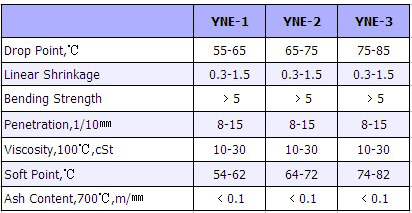
Precision Casting Wax mainly is used for precision mechanical process with zero allowance or very limited allowance. We can not adopt general casting technique, but can only adopt zero allowance casting or precision casting. Because of the product’s structure is very delicate and complex especially in bejeweled with golden and silver, such as diamond ring, brooch, earring etc.
The characteristics of precision casting wax are: good coating property, no denaturalization to be heated, good flow ability, good thermal stability, and well surface finish.
Product detail pictures:

We normally believe that one's character decides products' quality, the details decides products' high-quality ,while using the REALISTIC,EFFICIENT AND INNOVATIVE staff spirit for professional factory for Precision Casting Wax for Croatia Factories, The product will supply to all over the world, such as: Kyrgyzstan , Toronto , Borussia Dortmund , Till now, the items list has been updated regularly and attracted clients from around the globe. Comprehensive facts is often obtained in our web-site and you'll be served with premium quality consultant service by our after-sale group. They are likely to help you get thorough acknowledge about our goods and make a satisfied negotiation. Company go to to our factory in Brazil is also welcome at any time. Hope to obtain your inquiries for any pleased co-operation.
Microchannel Plate Detector MCP-MA25/2 sales@dmphotonics.com
Featured Research:
View online: https://jcp.aip.org/resource/1/jcpsa6/v138/i17/p174310_s1?isAuthorized=no&ver=pdfcov
Spectroscopic observation of gold-dicarbide: Photodetachment and velocity map imaging of the AuC2 anion
Photoelectron spectra following photodetachment of the gold dicarbide anion, AuC−
2 , have been recorded using the velocity map imaging technique at several excitation wavelengths. The binding energy spectra show well-defined vibrational structure which, with the aid of computational calculations and Franck-Condon simulations, was assigned to a progression in the Au–C stretching mode, ν3. The experimental data indicate that the features in the spectrum correspond to a 2A←3A transition, involving states which we calculate to have bond angles ∼147◦ but with a low barrier to linearity.
EXPERIMENTAL METHOD
Since the specific apparatus used for these experiments has not been previously published, a detailed description is given here. Experiments were performed under high vacuum conditions within a two chamber, differentially pumped system operated at pressures of 1 × 10^−4 and 1 × 10^−6 mbar, respectively. Gold-carbide clusters were produced within a Smalley-type laser ablation source modelled on our existing designs. The source was operated with benzene seeded in helium gas to produce the metal-carbon products. The clusters exit the source and expand towards a two stage Wiley-
McLaren type time of flight where anion species are pulse extracted orthogonally into a drift region. Ion optics corrects the flight path of the extracted anions so that they enter the VMI electrodes positioned immediately after the drift region. The geometry of the time of flight electrodes was designed such that the second order space focus was coincident with the photodetachment point within the VMI electrodes.25 At this point, the ion packets of the clusters were condensed to small volumes and separated in time according to their mass to charge ratio, m/e. Individual m/e species are probed by varying the photodetachment timing. A removable (via a linear motion feed-through), dual micro-channel plate detector (MCP, Del Mar Ventures, Del Mar Photonics MCP-MA25/2) is located immediately after the VMI electrodes to provide mass spectral identification
of cluster species for photodetachment. The velocity map imaging electrodes were pulsed to highvoltage 200 ns prior to the photodetachment event to ensure
stable potentials. Photodetachment was performed via laser light produced by a dye laser pumped by the second harmonic of a Nd:YAG laser. The incident laser power was varied in order to keep the number of detected electrons at a rate of ∼1 per laser pulse, but was typically on the order of a few microjoules at the point of entry into the chamber. To prevent deflection of the photodetached electrons by stray magnetic fields, the detection chamber was lined with magnetic shielding (Co-Netic 0.36 mm thickness, Magnetic Shield Corp.).
Research interests lay in the fields of laser chemistry and reaction dynamics, and include the following themes:
Reaction Dynamics:
Energy partitioning during photodissociation of van der Waals molecules.
Evaporation dynamics at the liquid-vacuum interface.
Electronic Spectroscopy:
Structure of van der Waals clusters.
2-Dimensional Laser Induced Fluorescence (2D-LIF) spectroscopy.
Rovibronic analysis of large polyatomic molecules.
Nanotechnology:
Nanoparticle formation using laser based methods.
Molecular spectroscopy
Reaction dynamics
https://www.dmphotonics.com/MCP_MCPImageIntensifiers/mcpma252.htm
photodetachment cross section
photodetachment spectroscopy
photodetachment of electrons
The engineers at H2W have developed our most compact voice coil positioning stage to date. The customer for this stage requested that it fit within a volume of 1.6 cubic inches (40 cubic mm) cube volume. The application required an ultra-compact stage due to space restrictions in their auto-focus mechanism.
The voice coil positioning stage (VCS02-001-CR-01-MC) is a closed loop system that can be used for high speed positioning and auto-focusing applications. The stage is driven by a NCC type actuator (NCC02-07-001-1R) and is guided by a precision linear crossed roller bearing. The voice coil has a 0.20″ [5.1 mm] stroke; generates 0.26 lbs [1.16 N] of continuous force and 0.78 lbs [3.50 N] of peak force. It includes a 1 micron resolution magnetic linear encoder. Voice coil positioning stages are ideal for applications that require quick, short moves with fast settling times.
Features:
- Compact footprint
- No moving cables
- High acceleration
- Custom strokes and force configurations available
H2W Technologies is dedicated to the design and manufacture of linear and rotary motion products that are used in the motion control industry. The complete line of linear electric motors includes: single and dual axis linear steppers, DC brush and brushless linear motors, voice coil actuators, and AC induction motors. Also offered is a complete line of ball screw, lead screw and belt driven positioning stages.
Other motion control products include: limited angle torque motors for compact, limited angular excursion rotary servo applications, 3 phase brushless rotary servo motors with matching digital servo amplifiers and permanent magnet linear brakes for fail-safe, zero power braking for baggage handling and people moving applications as well as amusement park rides.
With over 85 years combined experience in the linear and rotary motion field, the H2W Technologies team of engineers offers the optimal solution to the most demanding motion control requirements.
For additional information please contact H2W Technologies, 26380 Ferry Court, Santa Clarita, CA 91350; Tel: (661) 291-1620, Fax: (661) 291-1626, E-Mail: info@h2wtech.com or visit the website at www.h2wtech.com.


