Best Price on Special Wax in Agriculture and Forestry to Pakistan Factory
Short Description:
Product Detail
Product Tags
Best Price on Special Wax in Agriculture and Forestry to Pakistan Factory Detail:
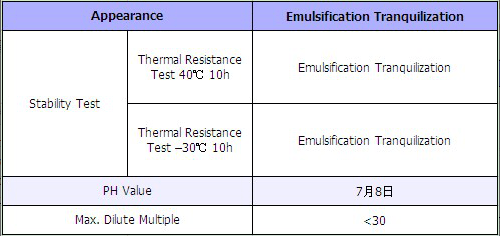
(1)YNE4 Series Special Molding Moisturized Wax for Fruit Trees
In order to protect fruit trees and shrubs from desiccation during winter dormancy or transportation or to keep moisture in summer drought, Special Molding Moisturized Wax is spayed on the surface of trees, forming the protecting film in surface of trees. The film has some adequate micro pore that could efficiently reduce the losses of moisture in the surface of the trees, and it simultaneously ensures physiological respiration of the trees.
(2) YNE5 Series Special Preventing Frostbite Wax for Trees
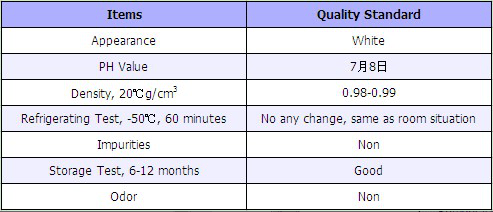
(3) In large northern areas of our country, the winter season is severe cold and the spring season is more heavy windy.
The early winter and the late spring’s frost are quite disadvantage to young plant, the weather is particularly abnormal coldness after spring comes, and frequently injures these trees. As a result young plant is cold death. YNE5 Series Special Preventing Frostbite Wax for Trees not only has anti-freezing effect on trees but also well effect on anti-sprouting etc. Spraying on branches and leaves of trees can make exuberant growth of foliage.
Product detail pictures:

We not only will try our greatest to present fantastic expert services to each purchaser, but also are ready to receive any suggestion offered by our prospects for Best Price on Special Wax in Agriculture and Forestry to Pakistan Factory, The product will supply to all over the world, such as: Brisbane , Malaysia , Ukraine , They are sturdy modeling and promoting effectively all over the world. Never ever disappearing major functions within a quick time, it's a have to for you of fantastic good quality. Guided by the principle of "Prudence, Efficiency, Union and Innovation. the corporation. ake an excellent efforts to expand its international trade, raise its organization. rofit and raise its export scale. We are confident that we are going to have a bright prospect and to be distributed all over the world in the years to come.
HVAC actuator replacement on a 2004 GMC envoy SLT with Automatic climate control. After replacing the Blower control module this GMC envoy would only blow air out of the defrost vent, a telltale sign of a faulty Mode door actuator. I show you how to replace an HVAC actuator and Perform an HVAC module recalibration.
Applies to all vehicles based on the GMT 360 platform which includes 02-09 Chevrolet Trailblazer,
02-09 Gmc Envoy,
02-04 Oldsmobile Bravada,
03-07 Isuzu Ascender,
04-07 Buick Rainier and
05-09 Saab 9-7X
more at https://scitech.quickfound.net
Explains basic principles of stabilization of large manned spacecraft (including space stations such as Skylab – Apollo Telescope Mount and interplanetary spacecraft) and the use of control moment gyroscopes to maintain stability. The International Space Station (ISS) uses four CMGs.
NASA Langley Research Center Film L-1009.
Public domain film from NASA, slightly cropped to remove uneven edges, with the aspect ratio corrected, and mild video noise reduction applied.
The soundtrack was also processed with volume normalization, noise reduction, clipping reduction, and/or equalization (the resulting sound, though not perfect, is far less noisy than the original).
https://creativecommons.org/licenses/by-sa/3.0/
https://en.wikipedia.org/wiki/Control_moment_gyroscope
A control momentum gyroscope (CMG) is an attitude control device generally used in spacecraft attitude control systems. A CMG consists of a spinning rotor and one or more motorized gimbals that tilt the rotor’s angular momentum. As the rotor tilts, the changing angular momentum causes a gyroscopic torque that rotates the spacecraft…
Mechanics
CMGs differ from reaction wheels. The latter applies torque simply by changing rotor spin speed, but the former tilts the rotor’s spin axis without necessarily changing its spin speed. CMGs are also far more power efficient. For a few hundred watts and about 100 kg of mass, large CMGs have produced thousands of newton meters of torque. A reaction wheel of similar capability would require megawatts of power.
Design varieties
Single-gimbal
The most effective CMGs include only a single gimbal. When the gimbal of such a CMG rotates, the change in direction of the rotor’s angular momentum represents a torque that reacts onto the body to which the CMG is mounted, e.g. a spacecraft. Except for effects due to the motion of the spacecraft, this torque is due to a constraint, so it does no mechanical work (i.e., requires no energy). Single-gimbal CMGs exchange angular momentum in a way that requires very little power, with the result that they can apply very large torques for minimal electrical input.
Dual-gimbal
Such a CMG includes two gimbals per rotor. As an actuator it is more versatile than a single-gimbal CMG because it is capable of pointing the rotor’s momentum vector in any direction. However, the torque caused by one gimbal’s motion often must be reacted by the other gimbal on its way to the spacecraft, requiring more power for a given torque than a single-gimbal CMG. If the goal is simply to store momentum in a mass-efficient way, as in the case of the International Space Station, dual-gimbal CMGs are a good design choice. Instead, if a spacecraft requires large output torque per available input power, single-gimbal CMGs are a better choice.
Variable-speed
Most CMGs hold the rotor speed constant. Some academic research has focused on the possibility of spinning the rotor up and down as the CMG gimbals. These so-called variable-speed CMGs (VSCMGs) offer few practical advantages, mostly because the output torque from the rotor is likely orders of magnitude smaller than that caused by the gimbal motion. So, this effect adds nothing of practical value on the time scale of the motion typical of CMGs. However, thanks to the additional degree of freedom, the variable-speed CMG can be used to avoid the geometric singularity that is the most serious drawback of the conventional CMG. The VSCMG also can be used as a mechanical battery to store electric energy as kinetic energy of the flywheels.
Singularities
At least three single-axis CMGs are necessary for control of spacecraft attitude. However, no matter how many CMGs a spacecraft uses, gimbal motion can lead to relative orientations that produce no usable output torque along certain directions. These orientations are known as “singularities” and are related to the kinematics of robotic systems that encounter limits on the end-effector velocities due to certain joint alignments. Avoiding these singularities is naturally of great interest, and several techniques have been proposed. David Bailey and others have argued (in patents and in academic publications) that merely avoiding the “divide by zero” error that is associated with these singularities is sufficient. Two more recent patents summarize competing approaches…
International Space Station
The ISS employs a total of four CMGs as primary actuating devices during normal flight mode operation… CMGs absorb momentum in an attempt to maintain the space station at a desired attitude…


