
China Gold Supplier for Precision Casting Wax for New Delhi Manufacturers
Short Description:
Product Detail
Product Tags
China Gold Supplier for Precision Casting Wax for New Delhi Manufacturers Detail:
Precision Casting Wax mainly is used for precision mechanical process with zero allowance or very limited allowance. We can not adopt general casting technique, but can only adopt zero allowance casting or precision casting. Because of the product’s structure is very delicate and complex especially in bejeweled with golden and silver, such as diamond ring, brooch, earring etc.
The characteristics of precision casting wax are: good coating property, no denaturalization to be heated, good flow ability, good thermal stability, and well surface finish.
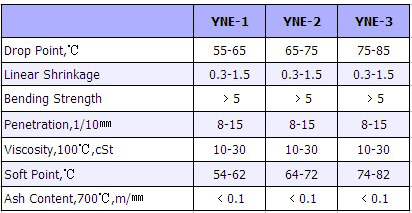
Product detail pictures:

It is a great way to further improve our products and repair. Our mission is always to create innovative products to prospects with a superior expertise for China Gold Supplier for Precision Casting Wax for New Delhi Manufacturers, The product will supply to all over the world, such as: Ecuador, Tunisia, Iceland, They're durable modeling and promoting well all over the world. Under no circumstances disappearing key functions in a brief time, it's a must for yourself personally of fantastic quality. Guided by the principle of Prudence, Efficiency, Union and Innovation. the business make an awesome efforts to expand its international trade, raise its enterprise. rofit and improve its export scale. We have been confident that we will have a vibrant prospect and to be distributed all over the world in the years to come.
Two important notes:
Hex fasteners for the cap should be torqued to 27-31 INCH LBS, not foot lbs
The Allen key size needed for the hex fasteners is 9/64
Be Sure to Checkout the Gettin Junk Done Stores!
GJD Shirts & Gear: https://shop.spreadshirt.com/gettinjunkdone/
GJD Stickers & Notebooks: https://www.redbubble.com/people/gettinjunkdone/shop
Thanks for watching!
Video Playlists by Topic
92 F150 – https://www.youtube.com/playlist?list=PLHRSPnh4bEkzB0v1kkEYIuToVeh9MEAkr
BW1356 Transfer Case Rebuild – https://www.youtube.com/playlist?list=PLHRSPnh4bEkxjnmLaUAxAJWThjkrcTpb0
F-Series & Bronco Headlight Upgrades – https://www.youtube.com/playlist?list=PLHRSPnh4bEkzrncoo06T3rRvvC2Y_JRuR
General Auto Repairs – https://www.youtube.com/playlist?list=PLHRSPnh4bEkx-mdi5iz9fX6w5DNxUnEV5
Project Myles: Hypermiling a Hyundai Accent – https://www.youtube.com/playlist?list=PLHRSPnh4bEkwKYI8iVeuAg9U6ezlvFWRU
2009 Cadillac CTS Timing Chain – https://www.youtube.com/playlist?list=PLHRSPnh4bEkw3OTs4Oro2VJTrLJD8wfyG
Landscaping – https://www.youtube.com/playlist?list=PLHRSPnh4bEkwFboEq2-Jvjmd7spVULd4_
Please comment, like, subscribe and share!
You can also fine me on Twitter – @GettinJunkDone
Originally, Gettin Junk Done was started with the intention of making a few simple How-To videos mostly dealing with my truck and motorcycle. Once I saw that a few of my uploads were doing well, I decided to continue with additional videos as projects came up. To me, I was just maintaining my own vehicles and making the occasional video along the way. I firmly believe that anyone can pick up a wrench and fix a piece of junk, thus the phrase “Get Some Junk Done” took on a life of its own for me over time.
It turns out that working on my truck and motorcycle is just a hobby for me and I am actually a high school chemistry teacher. As the channel grew I began incorporating Chemistry Lessons and Gettin Junk Done took on a new meaning. Currently “Gettin Junk Down” refers to any project I find myself wrapped up in, including my everyday work as a chemistry teacher. My teaching style is a casual, everyday approach to the material that lends to the struggling student, as is hopefully obvious in my video.
Hopefully Gettin Junk Done will continue to grow and gain more subscribers and viewers. In the meantime, I encourage you all to Get Some Junk Done.
-~-~~-~~~-~~-~-
“The Beginning of a Homestead by @GettinJunkDone”
-~-~~-~~~-~~-~-
Having issues with your Frigidaire Ice dispenser? Thawing it out takes care of many issues including loud fan noise, ice melting out ice dispenser and ice not dispensing.
Watch me thaw out the Ice Maker on this Frigidaire FGHB2869LFA. I add a piece of foil to attempt keep the drain tube free of ice and prevent this from happening again. I also check the auger motor because it is stuck.
If you find issues, here’s some links to parts for this fridge:
Gasket Set – keeps the icemaker sealed from the fridge air: https://www.amazon.com/s/?_encoding=UTF8&camp=1789&creative=390957&field-keywords=5303918650&linkCode=ur2&tag=mtsyoutube-20&url=search-alias%3Daps&linkId=OL75PLWUJJ27JXF7
Icemaker Thermostat Defrost: https://www.amazon.com/s/?_encoding=UTF8&camp=1789&creative=390957&field-keywords=5303918568&linkCode=ur2&rh=i%3Aaps%2Ck%3A5303918568&tag=mtsyoutube-20&url=search-alias%3Daps&linkId=UEPNNQYQEMIK4OQT
Defrost Heater: https://www.amazon.com/s/?_encoding=UTF8&camp=1789&creative=390957&field-keywords=242094802&linkCode=ur2&rh=i%3Aaps%2Ck%3A242094802&tag=mtsyoutube-20&url=search-alias%3Daps&linkId=O4S6U76RZBT7GJBA
Fan Assembly: https://www.amazon.com/s/?_encoding=UTF8&camp=1789&creative=390957&field-keywords=5304493604&linkCode=ur2&rh=i%3Aaps%2Ck%3A5304493604&tag=mtsyoutube-20&url=search-alias%3Daps&linkId=UODOVG5HDFERX5E6
Solenoid Assembly:https://www.amazon.com/s/?_encoding=UTF8&camp=1789&creative=390957&field-keywords=241675701&linkCode=ur2&rh=i%3Aaps%2Ck%3A241675701&tag=mtsyoutube-20&url=search-alias%3Daps&linkId=KOCCXBG3E3BI23N4


